OUR HISTORY
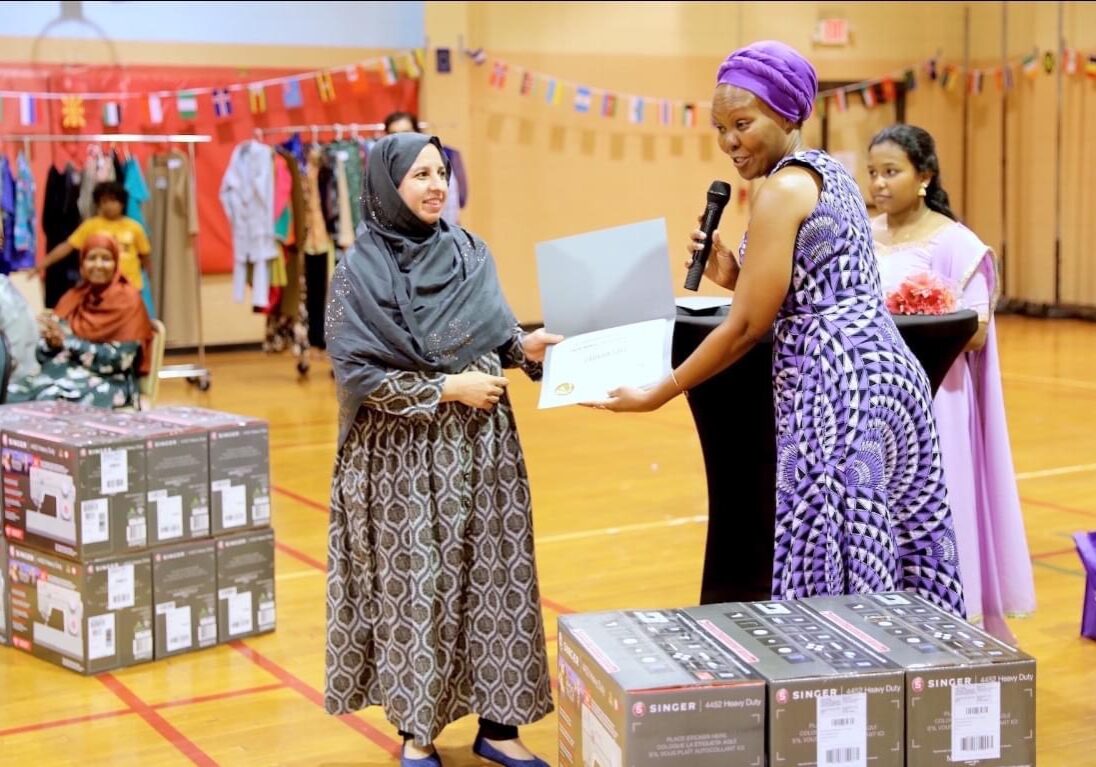
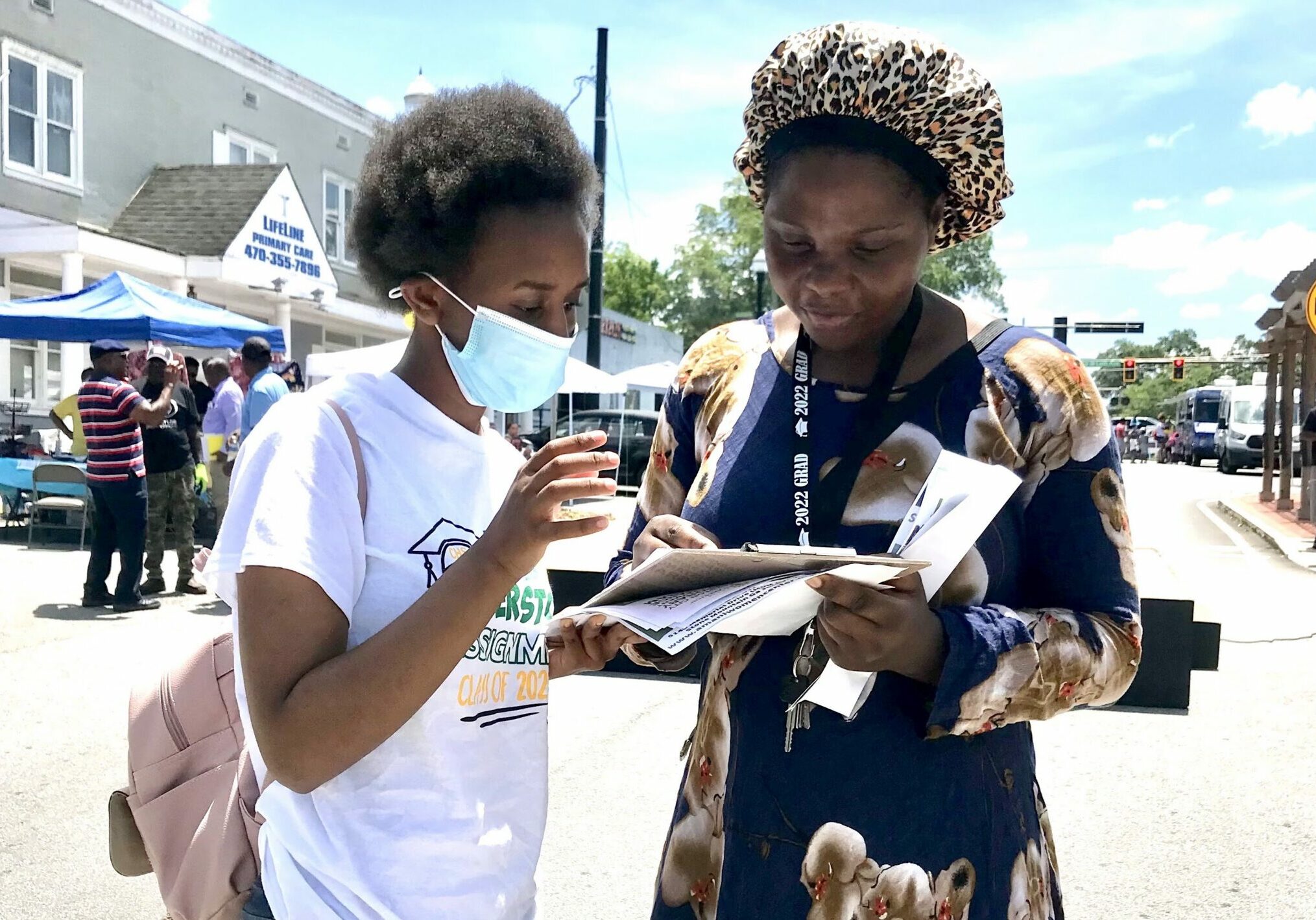
In 2005, while working as a public health professional in the Clarkston community of Dekalb County, GA, Doris Mukangu identified a significant need among underserved African refugee women and decided to take action. She began by providing health education, guiding refugees through a complex healthcare system, and gradually expanded her services to include programs like the Amani Sewing Academy.
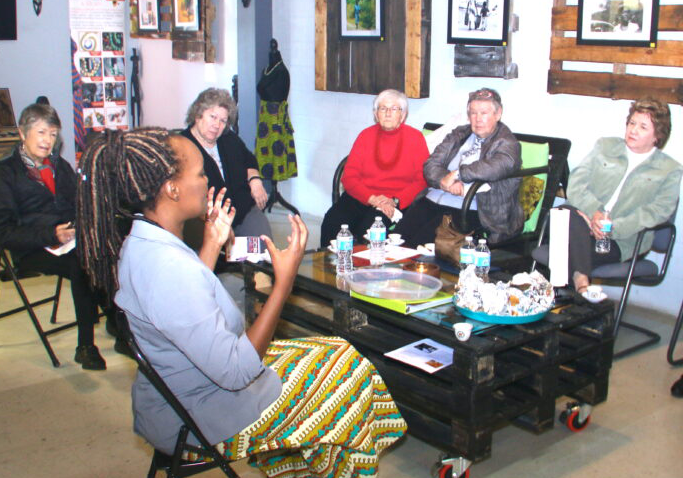
Doris approached her work with cultural sensitivity and competency by using tools and techniques that resonated with the women’s languages and cultural backgrounds. Her methods effectively empowered the refugee community with practical skills in a relatable manner.
Two years later, in 2007, Doris, along with a dedicated core team who shared her vision, officially established the Amani Women Center (AWC) as a 501(c)(3) non-profit organization in Clarkston—the city known for having the most diverse square mile of refugees in America. Today, AWC serves not only Clarkston but also Dekalb County, Gwinnett County, and the Atlanta metro areas.
Refugees encounter many challenges upon arriving in the United States, such as economic hardship, language barriers, and limited access to healthcare, technology, and cultural resources. Grassroots organizations like AWC play a crucial role in helping refugees overcome these obstacles and thrive in their new communities.
To support refugees effectively, AWC takes a holistic approach that addresses their economic, social, and emotional needs. By offering accessible programs and nurturing an inclusive community, AWC helps refugees build stable, independent lives. AWC's strategy includes fostering small-scale manufacturing to create sustainable job opportunities, collaborating with local businesses and organizations for job placement, and assisting women entrepreneurs in marketing their products through www.awcshop.org and other e-commerce platforms.
OUR HOLISTIC APPROACH
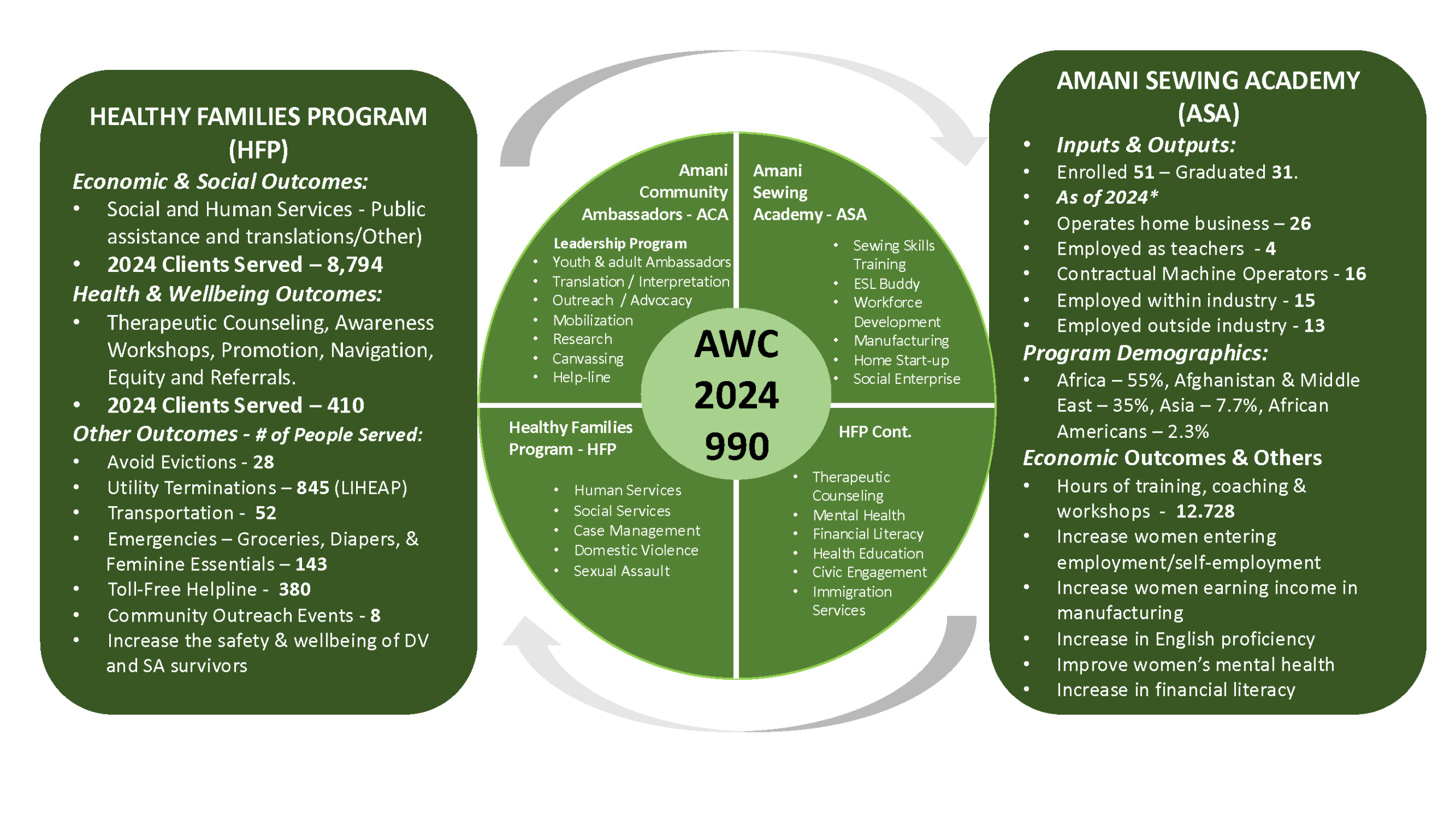
AWC provides 3 unique programs utilizing a holistic approach designed to economically empower,
build and sustain healthy families within the home and the community.

Vision
To be a trusted sanctuary where women of diverse backgrounds can find spiritual, mental, and physical healing-empowering them to build, thrive, and lead fulfilling lives.
Mission (USA)
To economically empower and educate refugee women and survivors of violence through culturally responsive programs that promote economic security and holistic well-being.
Mission (AFRICA)
To empower women and survivors of violence in Africa through culturally responsive education, skills training, and economic opportunity that promote self-sufficiency, dignity, healing, and holistic well-being.
Core Values
Dignity - We believe every woman and family deserves to be treated with honor, respect, and compassion regardless of background or circumstance.
Empowerment - We equip refugee women and survivors with the tools, opportunities, and support needed to achieve self-sufficiency and leadership.
Cultural Humility - We honor diverse languages, traditions, and lived experiences while learning from those we serve.
Resilience - We recognize and strengthen the courage, perseverance, and wisdom within the communities we serve.
Equity & Inclusion - We are committed to removing barriers and ensuring access to opportunities, services, and justice for all.
Community - We foster belonging, connection, and mutual support across cultures, generations, and experiences.
Collaboration - We believe lasting change happens through partnerships, shared knowledge, and collective action.
Healing & Safety - We create safe spaces that promote healing, wellness, and protection for survivors and vulnerable families.
Hope - We inspire pathways toward brighter futures through education, economic opportunity, and advocacy.
Integrity - We act with transparency, accountability, and stewardship in all relationships and programs.